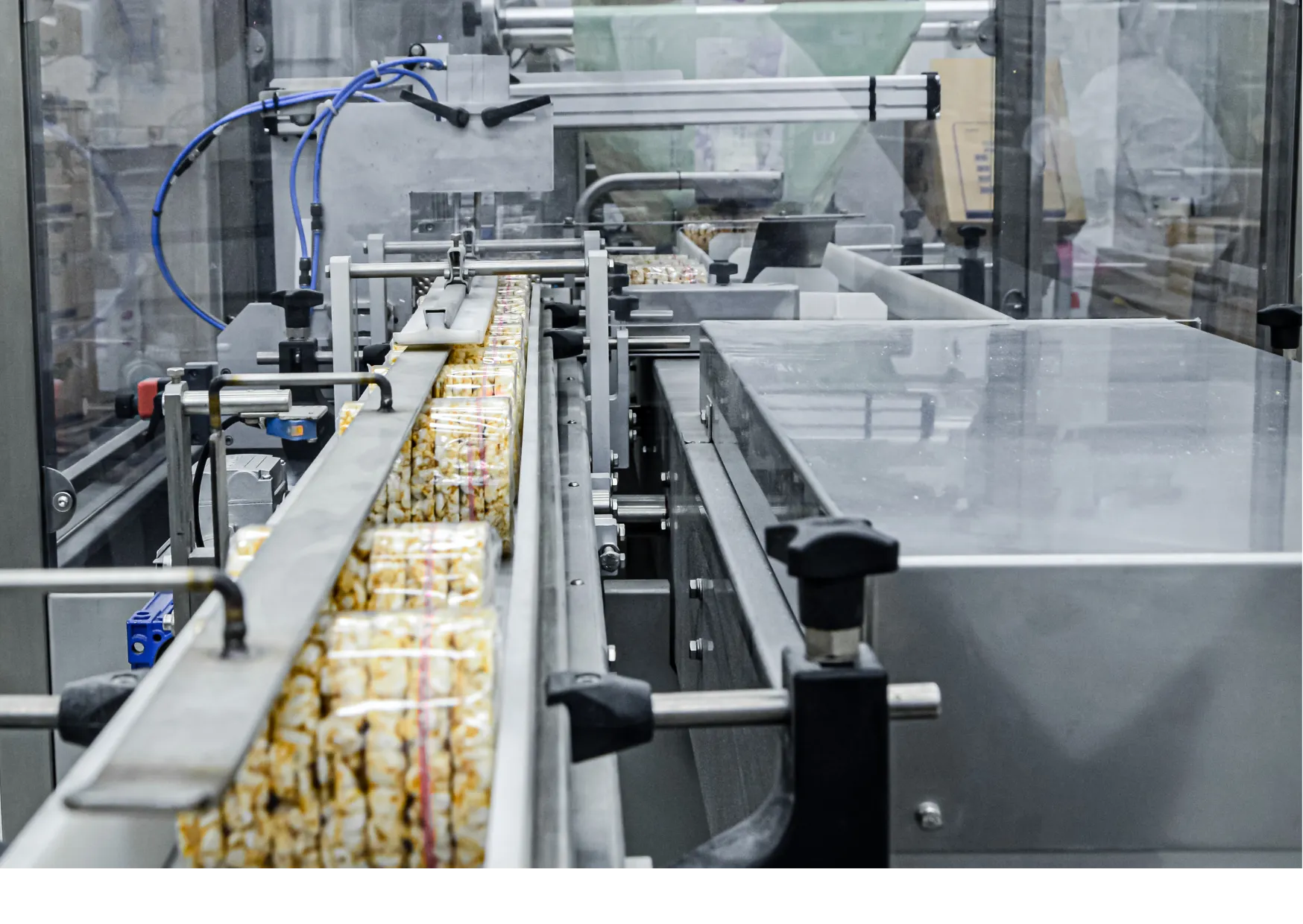
Food Production Line Automation: Challenges, Benefits and Real-World Applications
The food industry is facing a growing challenge: increasing demand, labor shortages, rising operating costs, and stricter quality requirements. Automation is no longer a competitive advantage alone – it is becoming a necessity for manufacturers seeking productivity, consistency, and long-term resilience.
TL;DR
The global food automation market is expected to reach USD 28.7 billion by 2033. Properly implemented automation projects can improve OEE by 15–25%, reduce waste, improve quality, and achieve ROI within 12–18 months.
Why Food Industry Automation Is Accelerating Worldwide
Food manufacturers across Europe, North America, the Middle East, and Asia are investing heavily in robotics, machine vision, digitalization, and industrial automation. The primary drivers include labor shortages, pressure on margins, increasing food safety requirements, and the need for production flexibility.
- Labor shortages in packaging, sorting, and repetitive production tasks.
- Cost pressure driven by energy prices and raw material costs.
- Food safety requirements including traceability and quality assurance.
- Demand for scalability and 24/7 production capabilities.
Key Challenges of Automation in Food Manufacturing
Hygienic Design Requirements
Food production environments require specialized equipment designed for washdown conditions and strict hygiene standards. Integrators must consider IP69K protection, hygienic design principles, food-grade lubricants, and compatibility with customer certification requirements.
Product Variability
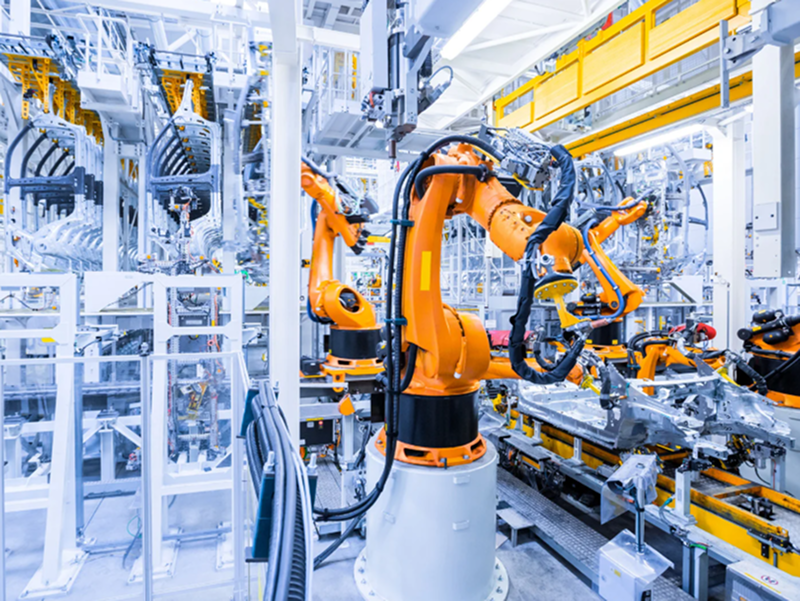
Unlike automotive components, food products vary naturally in size, shape, texture, and color. Modern robotic applications therefore rely heavily on machine vision and intelligent software.
Integration with Existing Production Lines
Most facilities cannot stop production for complete reconstruction. Automation projects must therefore integrate with existing conveyors, PLCs, SCADA systems, packaging machines, and quality control processes.
Measured Business Benefits
| Area | Typical Improvement |
|---|---|
| Overall Equipment Effectiveness (OEE) | +15% to +25% |
| Waste Reduction | Up to 83% |
| Labor Costs | Up to 16% reduction |
| Downtime Reduction | 30%–50% |
| Quality Inspection Accuracy | Up to 99.4% |
Real-World Application: Cheese Packaging Automation
One example of successful food industry automation involved a leading European cheese manufacturer. The challenge was a labor-intensive packaging process performed in refrigerated conditions with high employee turnover.
MJ Group designed and integrated a robotic packaging cell equipped with industrial robotics and machine vision technology. The solution automated product handling, positioning, and packaging while maintaining strict hygiene requirements.
Key results included:
- Continuous 24/7 operation.
- Reduced dependence on manual labor.
- Improved process stability.
- Lower operating costs.
- Higher production predictability.
Where Automation Delivers the Fastest ROI
- Primary and secondary packaging.
- Palletizing and depalletizing.
- Vision-based quality inspection.
- Sorting and grading.
- End-of-line logistics.
- Internal material transport using AMRs.
Cobots vs. Industrial Robots
Collaborative Robots (Cobots)
Cobots are ideal for flexible applications requiring frequent product changes, smaller footprints, and close cooperation with operators.
Industrial Robots
Industrial robots remain the preferred choice for high-speed, heavy-duty, and high-volume production environments where maximum productivity is required.
The Role of Machine Vision and AI
Modern food automation increasingly combines robotics with machine vision, artificial intelligence, and industrial data analytics. Vision systems can identify defects, measure dimensions, verify labels, and guide robots in real time.
AI-based systems can optimize production parameters, improve forecasting, and support predictive maintenance strategies.
Calculating Return on Investment
Successful ROI calculations should include:
- Labor savings.
- Waste reduction.
- Reduced downtime.
- Improved quality.
- Lower recruitment and training costs.
- Increased production capacity.
In many food manufacturing applications, payback periods of 12–18 months are achievable when automation targets high-volume and labor-intensive processes.
Choosing the Right Automation Partner
When selecting an automation integrator, manufacturers should evaluate:
- Food industry experience.
- Knowledge of hygienic design principles.
- Portfolio of completed projects.
- Technology independence.
- After-sales service capabilities.
- International project experience.
MJ Group has delivered automation, robotics, industrial electrical, digitalization, and machine vision projects since 2006, supporting manufacturers across Europe, the Middle East, Asia, and the Americas.
Conclusion
Automation is transforming the food industry. From packaging and palletizing to machine vision and predictive maintenance, modern technologies enable manufacturers to increase productivity, improve quality, reduce waste, and strengthen competitiveness.
Companies that invest strategically in automation today will be better positioned to address labor shortages, quality requirements, and growing market expectations in the years ahead.